Cupping therapy
Cupping (Hijama) is part of prophetic medicine and is mentioned in the Sunnah. Today it is practised as a complementary therapy in many countries.
In traditional practice, cupping is described as drawing out 'stagnant' blood and encouraging circulation, so the body feels lighter and more active. These are traditional descriptions rather than proven medical effects, and Hijama supports your wellbeing alongside — not instead of — medical care.
Why people choose Hijama
People choose Hijama for different reasons. Your therapist discusses what you hope for and whether Hijama suits you.
- Following a practice of the Sunnah
- Relaxation and a feeling of lightness afterwards
- Tight muscles, aches and general tension
- A regular wellness routine, at intervals agreed with the therapist
Head cupping
Head cupping is a common traditional form of Hijama. Some people choose it when they feel tension in the head and neck.
Head cupping is only performed after a health check, when your therapist confirms it is suitable. We don't present it as a treatment for migraine, memory or other medical conditions — if you have frequent headaches, please see a doctor first.
Cupping and hair
Cupping is sometimes suggested for the scalp and hair. There isn't enough evidence that it treats hair loss, genetic baldness or scalp infections, or that it improves hair growth.
For hair loss or scalp concerns, we recommend seeing our dermatologist first, who can look for the cause and explain your options.
Types of cupping
- Dry cupping. A glass cup is placed on a chosen point and the air is drawn out with a suction device. No cuts are made.
- Wet cupping (Hijama). The cup is applied with suction, then tiny superficial cuts are made and the cup is reapplied to draw a small amount of blood.
- Massage (sliding) cupping. Oil is applied to the skin and the cup is moved gently over the area. It is often chosen for tight, stiff muscles.
Other traditional forms include fire cupping, water cupping, herbal cupping and rapid (flash) cupping. Your therapist confirms which types are offered at our clinic and suitable for you.
Why have cupping at a medical centre?
Cupping needs strict sterilisation and a careful technique. At our clinic:
- All cupping tools are sterile and single-use, to prevent the spread of infection.
- A health check comes first, to make sure cupping is suitable for you.
- Cuts are kept tiny and superficial, to avoid unnecessary bleeding.
- You are relaxed and comfortable before the session begins.
- Your therapist explains the method and what to expect.
- Hijama is performed by a DoH-licensed Hijama therapist.
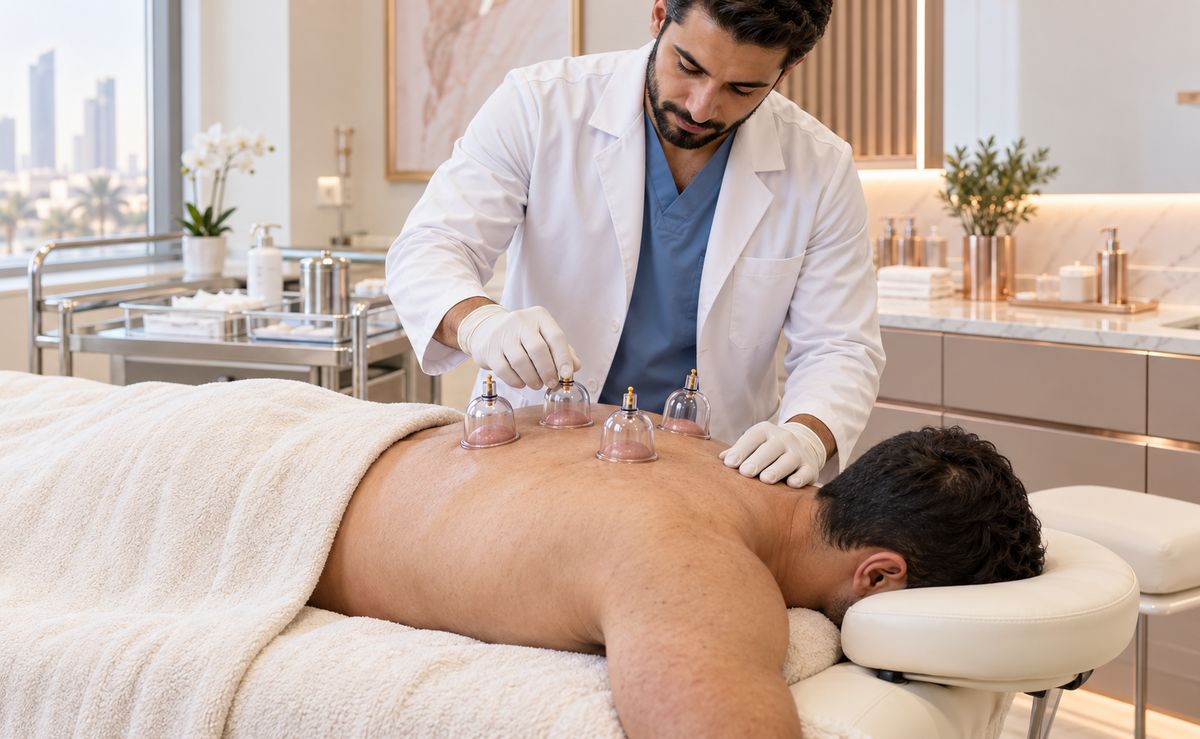
How Hijama is performed
- The cupping area is warmed.
- You lie face down, with your back uncovered and straight.
- The therapist wears sterile medical gloves and sterilises the skin.
- The cups are applied gently and quickly to the chosen points, usually in pairs.
- For wet cupping, tiny cuts are made in the skin and the cups are reapplied to draw a small amount of blood. For dry cupping, no cuts are made.
- The cuts are very small. Most people feel only mild, brief discomfort.
- The area is cleaned and dressed, and you rest for a few minutes.
Before your session
- Don't come on an empty stomach. Have a light meal at least two hours before your session.
- Don't smoke for 12 hours before.
- Traditionally, a drink of water with honey, or pomegranate or barley drink, is taken before cupping.
- Traditional advice is to avoid cold foods, eggs, fish, dairy and salty foods for about eight hours before.
- Traditional guidance also advises avoiding marital relations for 12 to 24 hours before cupping.
- Many patients perform wudu (ablution) before their session.
- Hijama is not performed during menstruation or pregnancy.
- The timing and points are decided by your therapist, based on your health check.
- If you have a heart condition, epilepsy, diabetes, anaemia, a bleeding disorder or take blood-thinning medicines, tell us first — you may need a doctor's advice before cupping.
After your session
- Don't smoke for 12 hours.
- Avoid exercise and heavy work for 24 hours.
- Traditional advice is to avoid fish, dairy, eggs, salty foods and very hot or cold food for 24 hours.
- You can shower after 12 hours. Wash the cupping area with water only — no soap or loofah.
- For swelling or soreness, hold a cold pack wrapped in cloth on the area for a minute at a time.
- Mild weakness, headache or dizziness can occur and usually settles within one to three days. Contact us if pain continues or you feel unwell.
- A warm drink with honey is traditionally recommended.
- Traditional guidance advises avoiding marital relations for 24 hours.
- Drink plenty of water. Green tea can be a good choice instead of drinks with caffeine.
Hijama at Adam & Eve
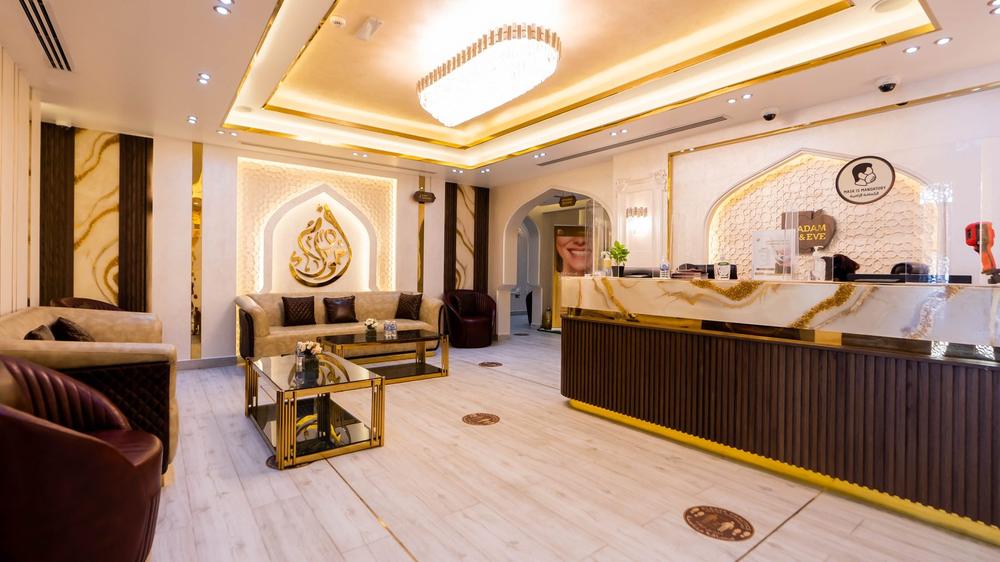
At Adam & Eve Specialized Medical Centre – Al Karamah, Hijama is carried out by a DoH-licensed therapist with sterile, single-use equipment, careful attention and follow-up. Reception confirms fees before you book, and our team is happy to answer your questions.
The information on this website is for general guidance and does not replace advice from a qualified healthcare professional. Please consult a clinician for advice about your individual health needs.